

Choosing a sofa is no longer a purely aesthetic decision. In today’s homes—especially in urban environments where living spaces often range between 60–100 m² (650–1,075 sq ft)—a sofa must balance visual appeal with measurable functionality.
The challenge is that many buyers still rely on vague criteria such as “looks good” or “feels comfortable,” which often leads to mismatches between the sofa and the actual space. A well-chosen sofa should not only complement the interior style but also support daily usage patterns, spatial flow, and long-term durability.
This guide breaks down how to evaluate modern sofas using concrete dimensions, performance metrics, and real-world usage scenarios, so decisions can be made with clarity rather than guesswork.
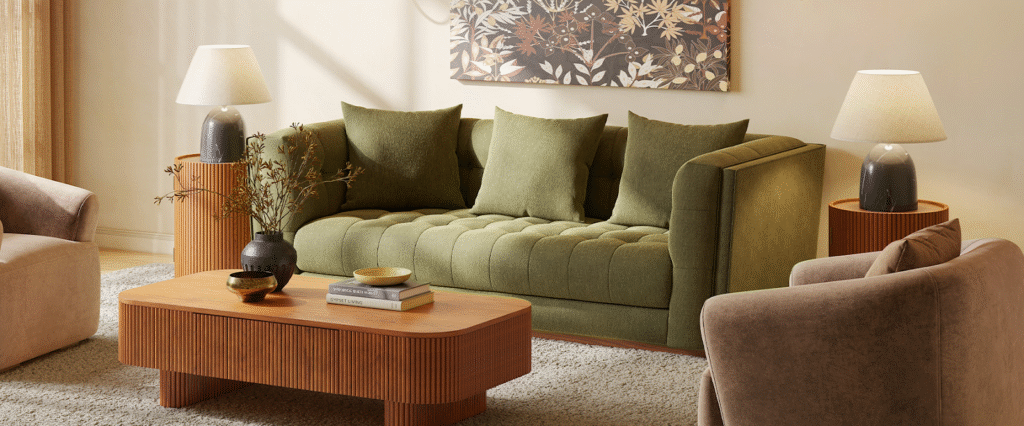
1. Understanding the Relationship Between Sofa Size and Space
The first and most critical factor is proportion. A sofa that is even slightly oversized can disrupt the entire layout of a room.
A practical rule is that the sofa width should stay within 60–70% of the available wall length. For example, if your usable wall space is 3.2 meters (126 inches), the ideal sofa width falls between 190–220 cm (75–87 inches). Anything beyond this range typically reduces flexibility for side tables or lighting.
Depth also plays a key role. Standard sofa depth ranges from 85–100 cm (33–39 inches). In rooms under 20 m² (215 sq ft), choosing a depth above 95 cm (37 inches can noticeably reduce usable walking space, especially if the clearance between the sofa and coffee table drops below 40 cm (16 inches).
Equally important is circulation. A functional layout should maintain at least 70–90 cm (28–35 inches) of walkway clearance. If placing a sofa compromises this threshold, it is effectively too large for the room regardless of how it looks.
2. Defining Style Through Structure, Not Just Appearance
“Modern style” is often misunderstood as simply minimal or trendy. In reality, it is defined by structure and proportion.
Modern sofas typically feature lower seat heights, usually between 40–45 cm (16–18 inches), which aligns with ergonomic sitting posture. Armrests are often reduced to 10–15 cm (4–6 inches) in width, minimizing visual bulk and allowing more efficient use of space.
Leg design also contributes to style and perception. Sofas with exposed legs of 12–18 cm (5–7 inches) create visible floor space underneath, which can make a room appear larger. In contrast, fully grounded sofas may feel heavier and are better suited to larger rooms above 25 m² (270 sq ft).
When selecting from curated collections of modern sofas, these structural elements often matter more than surface-level styling, as they directly impact both usability and spatial perception.
3. Matching Sofa Configuration to Lifestyle Needs
A sofa should be selected based on how it will be used on a daily basis, not just how it looks in a showroom.
For households where the sofa is used for upright activities such as working or dining, a seat depth of 50–60 cm (20–24 inches) is ideal. This range supports proper posture and reduces strain during extended sitting.
For more relaxed environments focused on lounging, deeper seating—typically 65 cm (26 inches) or more—provides greater comfort but may not be suitable for tasks requiring back support.
Sectional or modular sofas are particularly effective in multi-functional spaces. A modular unit usually measures 70–100 cm (28–39 inches) per segment, allowing users to reconfigure layouts depending on need. This flexibility is especially valuable in apartments under 80 m² (860 sq ft), where a single room often serves multiple purposes.
4. Material Selection: Durability, Maintenance, and Performance
Material choice is where many buyers underestimate long-term impact. The difference between materials is not just aesthetic—it directly affects lifespan, maintenance cost, and daily usability.
Fabric sofas should be evaluated using durability metrics such as the Martindale rub test. For standard residential use, a rating of at least 25,000 rubs is recommended, while high-use environments benefit from 40,000–50,000 rubs.
Performance fabrics add another layer of practicality. These materials are typically treated with water- and stain-resistant coatings while maintaining air permeability. This makes them suitable for households with children or pets, where spills are frequent but comfort during prolonged seating is still important.
Leather offers a different set of advantages. Full-grain leather can last 10–15 years, significantly longer than most fabric options. However, it performs best in controlled indoor environments with humidity levels between 40–60%, as overly dry conditions can lead to cracking.
Synthetic leather alternatives are more affordable but generally have a shorter lifespan of 3–5 years under regular use.
5. Comfort and Ergonomics: Quantifying What “Feels Right”
Comfort is often treated as subjective, but it can be broken down into measurable factors.
Seat height, ideally between 40–45 cm (16–18 inches), allows most users to sit with feet flat on the ground. If the seat is too low, it places strain on the knees when standing; too high, and it reduces stability.
Backrest angle is another critical factor. A range of 100–110 degrees provides a balance between support and relaxation. Angles beyond this range may feel comfortable for short periods but are less suitable for extended sitting.
Cushion density also plays a role. Foam densities between 30–35 kg/m³ offer a balance between softness and support. Lower densities tend to lose shape quickly, while higher densities may feel too firm for everyday use.
6. Common Buying Mistakes That Impact Functionality
One common mistake is prioritizing showroom appeal over real-life conditions. A sofa that feels comfortable in a large display area may feel overwhelming in a smaller home.
Another issue is ignoring long-term wear. Light-colored fabrics without protective treatments often show visible wear within 6–12 months in high-use households, leading to premature replacement.
Buyers also frequently underestimate the importance of configuration. Fixed sofas may limit future layout changes, particularly in rental properties or spaces where furniture needs to adapt over time.
7. Final Considerations Before Making a Purchase
Before making a final decision, it is important to evaluate the sofa in context rather than isolation.
The sofa should align with the room’s dimensions, maintain proper circulation space, and match the intended usage pattern in terms of depth and support. Material choice should reflect both lifestyle and maintenance expectations, while the overall design should integrate with the broader interior rather than dominate it.
Conclusion
Selecting a sofa today requires a balance between design intent and practical performance. As living spaces become more compact and multifunctional, the margin for error becomes smaller.
A well-chosen sofa enhances both the usability and visual coherence of a space, while a poorly chosen one can limit how the space functions on a daily basis.
By evaluating measurable factors such as size ratios, material durability, and ergonomic standards, buyers can make more informed decisions. In this context, thoughtfully designed modern sofas offer a reliable solution, combining aesthetic clarity with the functional demands of contemporary living.
